Guides · 8 min read
Instax Film Formats: Mini, Square and Wide
Three sizes, one that fits your camera, and why they are not interchangeable.
Short answer
Mini, square and wide are three incompatible sizes — the camera decides which you buy, and there is no adapter. All three share a 62mm picture edge: square is 1.35 times mini in area, wide is 2.15 times. Every pack is ten shots at ISO 800, and the first thing ejected is the black dark slide, not a wasted photo.
Buying the wrong Instax film is the most common mistake in instant photography, and it is an expensive one because film is sold ten shots at a time. This explains which format fits which camera, how much bigger the bigger ones actually are, and the handful of things about the film itself that account for most disappointing prints.
Three formats, and only one number they share
Instax film comes in three sizes and they are not versions of each other. They are three different products that happen to share a brand.
Mini is a 54 × 86mm card with a 46 × 62mm picture on it — about the size of a credit card, with the picture smaller than that because of the white border.
Square is 86 × 72mm with a 62 × 62mm picture.
Wide is 108 × 86mm with a 99 × 62mm picture.
Notice what all three have in common: the picture is 62mm on one side, every time. That is the width of the chemistry sheet inside the camera, and it is the reason the formats differ only in the other direction. Mini is a 62mm strip cut short, wide is the same strip left long, and square is the middle.
What that means in area, taking mini as 1:
Square is 1.35 times the picture. Wide is 2.15 times. Wide is not a little bigger than mini — it is more than double, and you notice it immediately when you hold one.
Which format your camera takes
This is the part people get wrong, and it is worth being blunt: the formats are not interchangeable. A mini pack will not load into a square camera. There is no adapter. The pack is physically the wrong size and the camera will not close.
The format your camera takes is printed on the camera itself, usually on the back or inside the film door and it is in the model name more often than not.
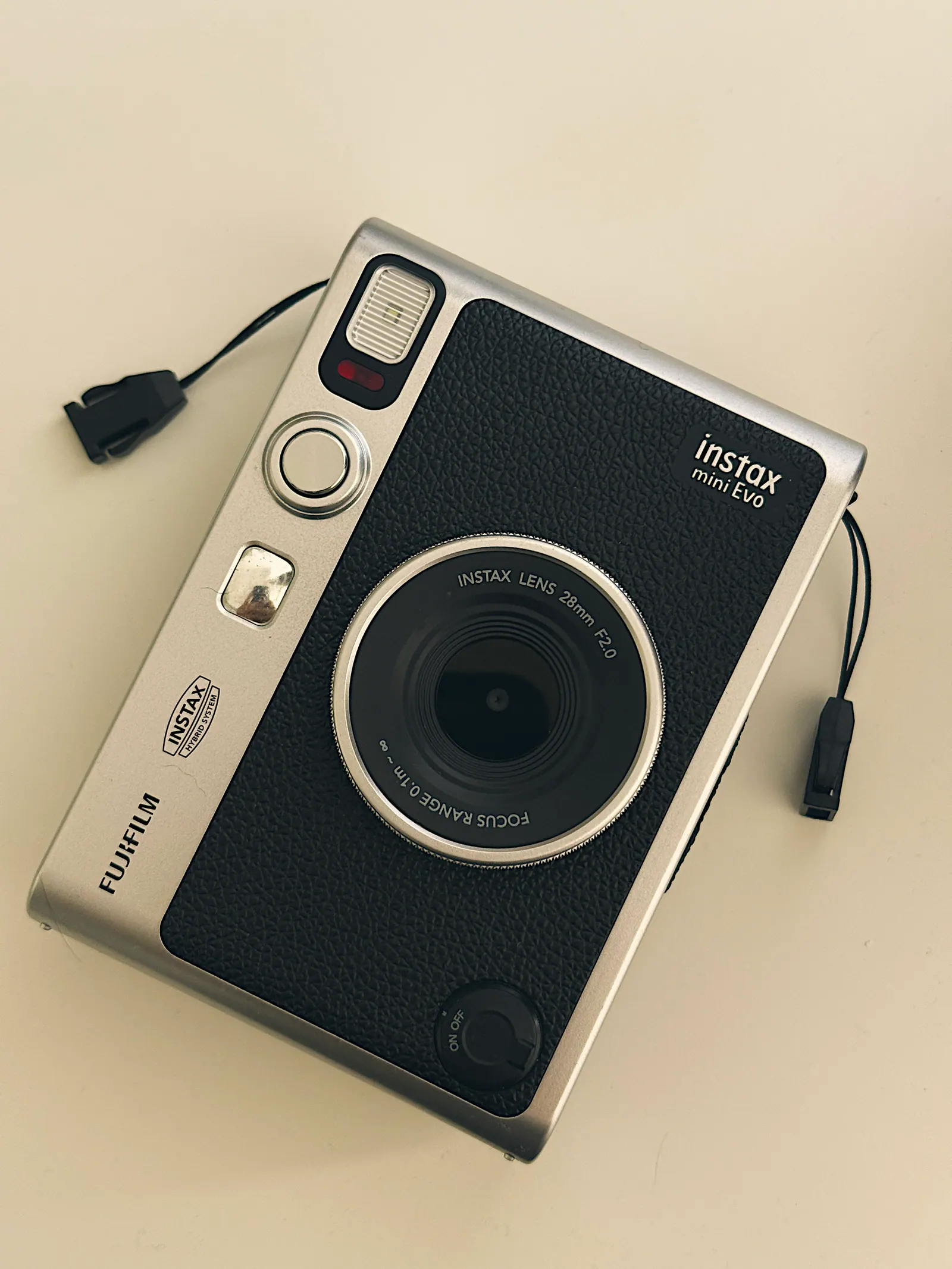
Mini cameras: mini 12, mini 11, mini 9, mini 40, mini 90 Neo Classic, mini Evo, mini LiPlay.
Square cameras: SQ1, SQ40, SQ6, SQ20.
Wide cameras: Wide 300.
Printers follow the same rule and the same naming: the mini Link prints mini, the Square Link prints square, the Link Wide prints wide.
If the model name contains a number with no format word — mini 12, SQ1, Wide 300 — the format is the word before the number. That covers almost the whole range.
Film, paper, cartridge or refill — all the same thing
The packs go by several names, and that is worth clearing up before you buy the wrong thing.
Fujifilm calls it film. Shops list it as instant film, film paper or even photo paper. A pack is also sold as a cartridge or a refill. All of those mean one thing: a sealed ten-sheet pack for one of the three formats.
One clarification, because the word paper misleads people: this is nothing like inkjet photo paper. There is no ink and no printer involved. Each sheet carries its own developer inside the thick white border, so the sheet is the photograph and the chemistry at once.
What matters when buying is not the word but the format: mini, square or wide, printed on both the camera and the box. Get that right and the name on the label makes no difference.
What is in a pack, and why the first shot is black
Every Instax pack is ten shots. Packs are sold as one, two or three of those, so a box labelled twenty is two packs of ten, not a twenty-shot cartridge.
Load a fresh pack and the first thing the camera ejects is a black plastic sheet. That is not a wasted photo. It is the dark slide that kept the film from being exposed inside the pack, and every pack has one. If your camera ejects it, the film is loaded correctly. If it does not, the pack is not seated.
The counter on the camera counts down from 10. When it reads 0 the pack is empty, and opening the door before then ruins whatever is left.
ISO 800 and what it does to your pictures
All Instax film is ISO 800, in all three formats. You cannot buy it slower or faster, and this single number explains most of what people find surprising about instant photos.
ISO 800 is fast film. Outdoors in sun the camera has to fight to avoid overexposing, which is why the simpler bodies have a brightness dial rather than a proper aperture — there is not much room to work in.
Indoors it is the opposite. 800 sounds like plenty but the lens is slow and the flash is small, so anything past about two or three metres falls into darkness. The bright subject with a black background behind it is not a fault: it is the flash reaching the person and not the room.
The practical rule is unglamorous. Get closer than you think you need to, and put the light behind you rather than behind your subject.
Developing: temperature matters, shaking does not
The picture looks finished after about ninety seconds and keeps settling for a few minutes after that. Nothing you do speeds it up.
Do not shake it. This is borrowed from a different film era and it does not apply. The chemistry in Instax is spread between sealed layers when the rollers squeeze the sheet on the way out. It is already where it needs to be. Shaking cannot help and can leave blotches where the layers separate.
Temperature is the one thing that does matter. The chemistry is a reaction, and reactions slow down when cold. Below roughly five degrees it stalls and you get pale, blue-shifted pictures. In winter, develop the print in an inside pocket rather than in your hand.
Keep it out of direct sun for the first minute. Not because it will be destroyed — Instax is not peel-apart film — but bright light during development pushes the colour.
Storage and expiry
Instax film has a date on the box and it is not decoration. Expired film loses contrast and shifts colour, usually towards green or magenta depending on how it was stored. It still works. It just stops being predictable, which for ten shots a pack is a real cost.
Heat is worse than age. A pack left on a car dashboard for an afternoon can be ruined while still months inside its date. Cool and dry is all it asks: a drawer is fine, a a fridge is unnecessary, a hot car is fatal.
Buy what you will shoot in a few months rather than a year’s supply on offer. The saving is smaller than the loss.
Monochrome and special editions
Beyond the standard colour film there is monochrome, available in mini and square. It is genuine black and white film, not a filter, and it is contrastier than converting a colour shot would be.
Then there are the bordered editions — coloured frames, black frames, patterned frames. These matter less than they look: the film inside is the standard emulsion. You are buying a different white border, and it loads and behaves exactly like the plain version. If the pattern is worth the premium to you, that is a taste decision, not a technical one.
All of them are the same ISO 800, the same ten shots, and the same format compatibility as their plain counterparts.
Cost per shot, honestly
Film is the real price of an instant camera. The body is bought once; the film is bought forever, ten shots at a time.
Mini is the cheapest per shot by a clear margin, which is why it is the format most people end up on.
Square and wide cost noticeably more per shot and are usually close to each other. That comparison is where wide wins: for roughly what square costs, wide gives you 2.15 times the picture against mini, where square gives 1.35. If you are choosing between those two on price, wide is the better value per square millimetre.
Prices move by region and by pack size, so check before ordering. What does not change is the order: mini cheapest, then square and wide together, well above it
What to buy
You do not choose the film. The camera chooses it. Check the format on your body first and buy that. Everything else is secondary.
If you are choosing a camera and the film is part of the decision:
Mini if you will shoot a lot, give prints away, or are buying for someone who might lose interest. Cheapest per shot, widest choice of bodies.
Square if you like the format for its own sake. It costs what wide costs and gives you less picture, so this is an aesthetic decision — which is a perfectly good reason.
Wide if the print is the point. Group shots, landscapes, anything you will put on a wall. More than double the picture for roughly what square costs.
Buy one pack before you buy five. Ten shots is enough to find out whether you like the format in your hands.
Common questions
Can I use mini film in a square camera?
No. The formats are physically different sizes and there is no adapter. The pack will not seat and the film door will not close. The format your camera takes is printed on the body and is almost always in the model name.
How many photos are in an Instax pack?
Ten, in every format. Boxes sold as twenty or sixty contain two or six packs of ten, not a larger cartridge.
Why did my camera eject a black card?
That is the dark slide, which protected the film inside the pack. Every pack has one and it is ejected first. Seeing it means the film loaded correctly.
Should I shake an Instax print to develop it?
No. The chemistry is already spread by the rollers as the print leaves the camera. Shaking does nothing useful and can cause blotches. Temperature is what matters: below about five degrees development stalls.
Is wide film worth the extra cost over square?
On area, yes. Square and wide cost similar amounts per shot, but wide gives 2.15 times the picture of mini where square gives 1.35. If you are deciding between the two on price, wide is more print for the money.
What paper does an Instax camera use?
None, in the usual sense. Instax cameras take sealed film packs, not paper you feed in: mini, square or wide, ten sheets each, ISO 800. Shops often label the packs as film paper or photo paper, but there is no ink and no printer — each sheet develops itself.
What is the difference between Instax film, a cartridge and a refill?
Nothing — they are three names for the same ten-sheet pack. What actually has to match is the format printed on your camera: mini, square or wide.
Keep reading
Last updated September 19, 2026