Fujifilm FinePix X100
Fixed-lens compact · 12.3 MP APS-C · 2011
Short answer
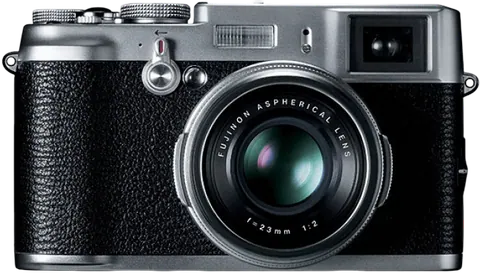
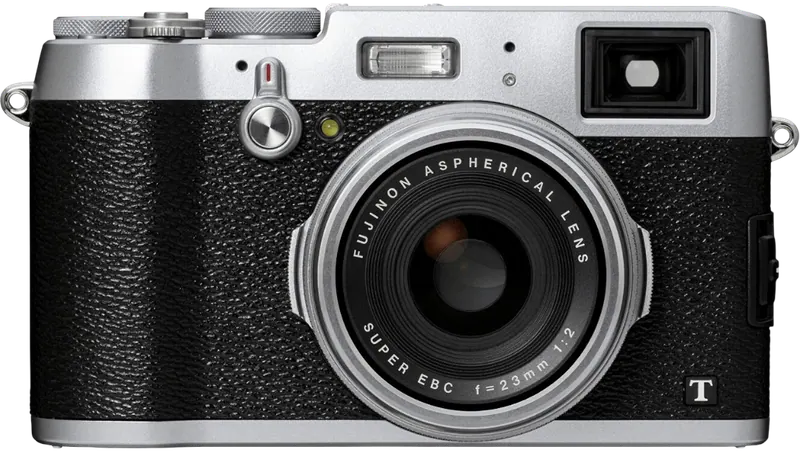
The Fujifilm FinePix X100 is a fixed-lens compact released in March 2011 at a US launch price of $1,199. It has a 12.3 MP APS-C EXR CMOS sensor and the EXR Processor. There is no in-body stabilization.
It weighs 445 g and measures 126.5 × 74.4 × 53.9 mm. The body is not weather sealed. It records to one SD card slot. It shoots video at 720/24p. The lens is fixed: 23mm f/2 (35mm equivalent).
The viewfinder is hybrid optical (0.50×) / electronic. The rear screen is a 2.8-inch fixed LCD with 460K dots. Native sensitivity runs ISO 200–6400. Continuous shooting reaches 5 fps.
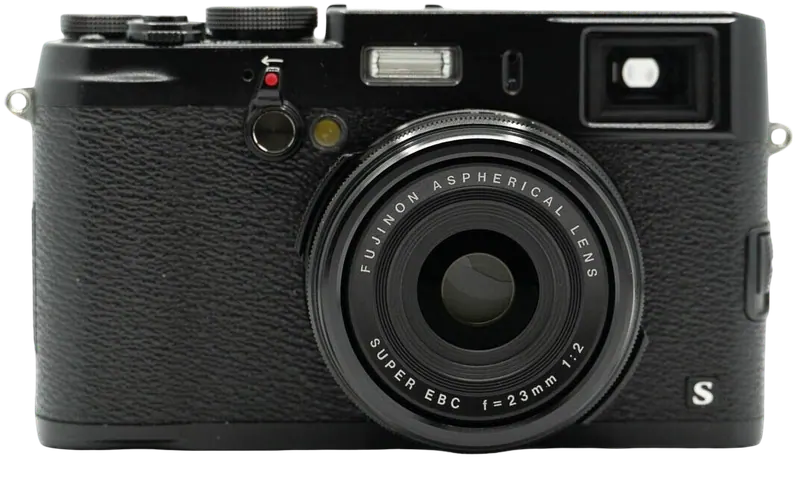
It was followed by the X100S in 2013.
FinePix X100 specifications
- Released
- March 2011
- Launch price
- $1,199
- Sensor
- 12.3 MP APS-C
- Processor
- EXR Processor
- In-body stabilisation
- No
- Weight
- 445 g
- Film simulations
- 10
- Next model
- X100S (2013)
Specifications
- Sensor
- 12.3 MP EXR CMOS
- Sensor format
- APS-C, 23.6 × 15.8 mm
- ISO range
- ISO 200–6400
- Burst
- 5 fps
- Video
- 720/24p
- Viewfinder
- Hybrid optical (0.50×) / electronic
- Screen
- 2.8-inch fixed LCD, 460K dots
- Lens mount
- Fixed 23mm f/2 lens (35mm equivalent)
- Card slots
- 1× SD
- Weather sealed
- No
- Dimensions
- 126.5 × 74.4 × 53.9 mm
Dimensions
- 126.5 mm wide
- 74.4 mm tall
- 53.9 mm deep
Film simulations on the FinePix X100
It has 10 of the 20 film simulations. It lacks REALA ACE, Nostalgic Neg., ETERNA Bleach Bypass, Classic Negative, ETERNA / Cinema, and 5 more.










camera.lensesFor
The lens does not come off. It is a 23mm f/2 (35mm equivalent) built into the body.
camera.used
Fujifilm no longer sells the FinePix X100 new. It arrived in March 2011 and the X100S replaced it in January 2013, so what is on sale now is second hand. Its launch price was $1,199, the only official figure it ever had.
Compare with
Other X100 cameras
Common questions
When was the Fujifilm FinePix X100 released?
Fujifilm released it in March 2011 at a US launch price of $1,199.
Does the FinePix X100 have in-body stabilization?
No. Stabilization depends on the lens, if the one you mount has it.
How many film simulations does the FinePix X100 have?
It has 10 of the 20 film simulations. It lacks REALA ACE, Nostalgic Neg., ETERNA Bleach Bypass, Classic Negative, ETERNA / Cinema, and 5 more.
How much does the FinePix X100 weigh?
445 g with battery and card, and it measures 126.5 × 74.4 × 53.9 mm.
Is the FinePix X100 weather sealed?
No, the body is not sealed.
What lens does the FinePix X100 have?
The lens does not come off. It is a 23mm f/2 (35mm equivalent) built into the body.
Is the FinePix X100 still sold new?
No, Fujifilm has discontinued it and the X100S took its place.
Owner reviews
No reviews yet. Be the first to write one.
Last updated August 20, 2026