Fujifilm X100VI
Fixed-lens compact · 40.2 MP APS-C · 2024
Short answer
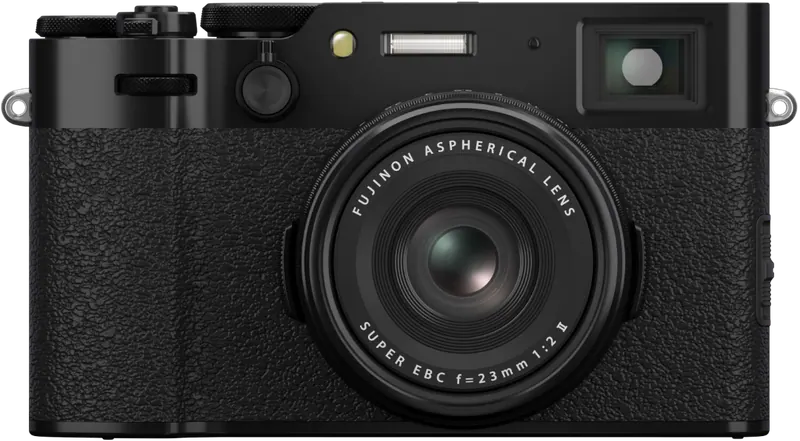
The Fujifilm X100VI is a fixed-lens compact released in February 2024 at a US launch price of $1,599. It has a 40.2 MP APS-C X-Trans CMOS 5 HR sensor and the X-Processor 5. The same sensor and processor are in the X-E5, X-T50, X-T5, and X-H2. In-body stabilization is rated at up to 6 stops.
It weighs 521 g and measures 128.0 × 74.8 × 55.3 mm. Fujifilm rates the battery at about 310 shots per charge. The body is not weather sealed. It records to one SD UHS-I card slot. It shoots video at 6.2K/30p, 4K/60p, 10-bit 4:2:2. The lens is fixed: 23mm f/2 (35mm equivalent). It is the heaviest X100 camera.
The viewfinder is hybrid optical / 3.69M-dot OLED electronic. The rear screen is a 3.0-inch tilting touchscreen with 1.62M dots. Native sensitivity runs ISO 125–12800, extended to 64–51200. Continuous shooting reaches 20 fps electronic (crop), 11 fps mechanical.
Compared with the X100V (2020), the previous model in the series:
- 40.2 MP instead of 26.1 MP
- X-Trans CMOS 5 HR sensor (was X-Trans CMOS 4)
- X-Processor 5 (was X-Processor 4)
- in-body stabilization (up to 6 stops), which the X100V lacked
- 3 new film simulations (REALA ACE, Nostalgic Neg., and ETERNA Bleach Bypass)
- 43 g heavier (521 g)
- 310 shots per charge instead of 350
- launch price $200 higher ($1,599)
It is still in Fujifilm’s current lineup.
X100VI specifications
- Released
- February 2024
- Launch price
- $1,599
- Sensor
- 40.2 MP APS-C
- Processor
- X-Processor 5
- In-body stabilisation
- Yes, 6 EV
- Battery life
- 310 shots
- Weight
- 521 g
- Film simulations
- 20
- Previous model
- X100V (2020)
Specifications
- Sensor
- 40.2 MP X-Trans CMOS 5 HR
- Sensor format
- APS-C, 23.5 × 15.7 mm
- ISO range
- ISO 125–12800 (64–51200 extended)
- Burst
- 20 fps electronic (crop), 11 fps mechanical
- Video
- 6.2K/30p, 4K/60p, 10-bit 4:2:2
- Viewfinder
- Hybrid optical / 3.69M-dot OLED electronic
- Screen
- 3.0-inch tilting touchscreen, 1.62M dots
- Lens mount
- Fixed 23mm f/2 lens (35mm equivalent)
- Card slots
- 1× SD UHS-I
- Weather sealed
- No
- Dimensions
- 128.0 × 74.8 × 55.3 mm
Dimensions
- 128 mm wide
- 74.8 mm tall
- 55.3 mm deep
Film simulations on the X100VI
It has all 20 film simulations, the full current set.




















camera.lensesFor
The lens does not come off. It is a 23mm f/2 (35mm equivalent) built into the body.
Recipes for the X100VI
Recipes written for X-Trans V cameras.

Compare with
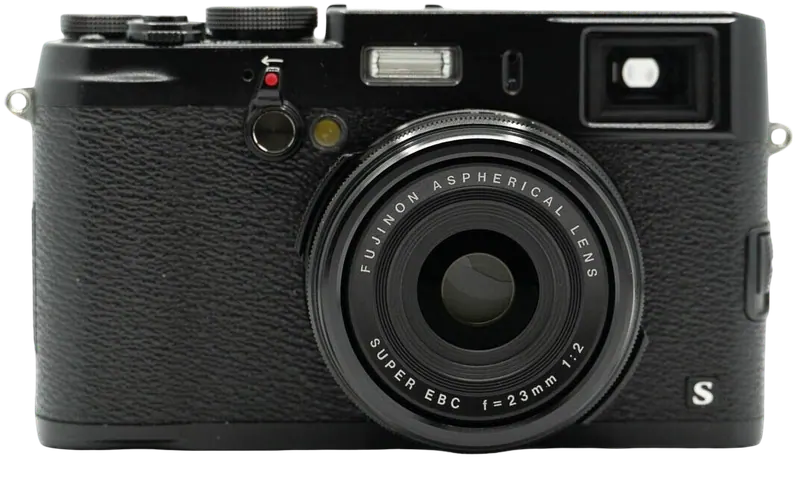
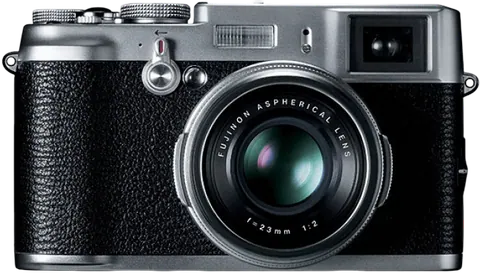
Other X100 cameras
Common questions
When was the Fujifilm X100VI released?
Fujifilm released it in February 2024 at a US launch price of $1,599.
Does the X100VI have in-body stabilization?
Yes, rated by Fujifilm at up to 6 stops.
How many film simulations does the X100VI have?
It has all 20 film simulations, the full current set.
How long does the X100VI battery last?
Fujifilm rates it at about 310 shots per charge.
How much does the X100VI weigh?
521 g with battery and card, and it measures 128.0 × 74.8 × 55.3 mm.
Is the X100VI weather sealed?
No, the body is not sealed.
What lens does the X100VI have?
The lens does not come off. It is a 23mm f/2 (35mm equivalent) built into the body.
Is the X100VI still sold new?
Yes, it is still in Fujifilm’s current lineup.
What changed from the X100V?
40.2 MP instead of 26.1 MP, X-Trans CMOS 5 HR sensor (was X-Trans CMOS 4), and X-Processor 5 (was X-Processor 4).
Owner reviews
No reviews yet. Be the first to write one.
Last updated August 30, 2026